CPAP Mask Types: Which One Is Right for You?

When I scroll through CPAP support groups, I see the same theme come up again and again: “My mask is driving me crazy.”
So nothing like the peaceful relationship you see below of a man and a CPAP machine in perfect harmony.
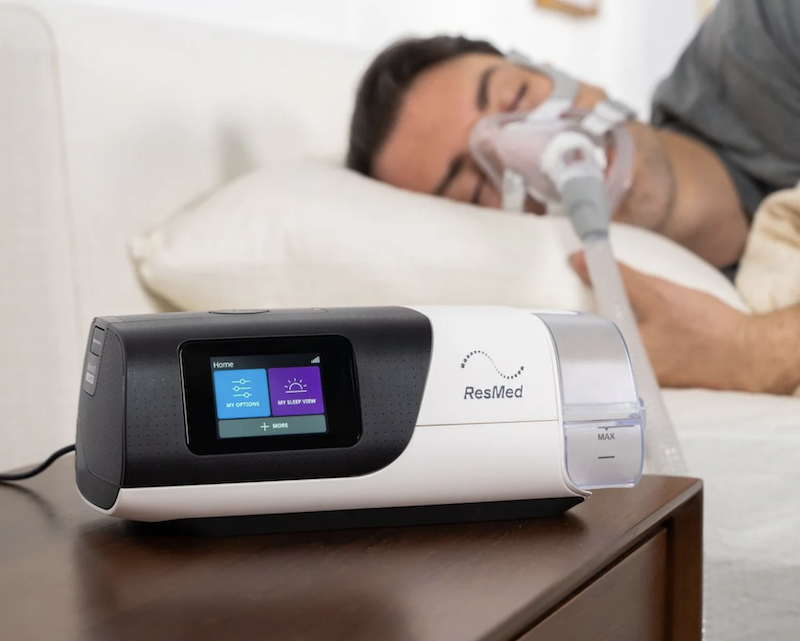
But it can be!
It’s not usually the machine people struggle with; it’s the mask. Too tight, too leaky, too bulky, too claustrophobic. Finding the right one can feel like dating. You try a few, some don’t click, and eventually, you find “the one” that makes therapy sustainable.
So let’s break down the three main CPAP mask types — not just what they are, but who they’re really for.
CPAP Mask Types at a Glance
| Mask Type | Best For | Pros | Trade-Offs |
|---|---|---|---|
| Nasal Pillows 🎈 | Side & stomach sleepers, minimalists, facial hair | Lightest, least bulky, fewer marks | Not ideal for mouth breathers, less comfy at high pressures |
| Nasal Masks 👃 | Nose breathers, side & back sleepers, beginners | Balance of comfort & seal, moderate pressure ready | Won’t work if you mouth-breathe, leaks if stomach sleeping |
| Full Face 😮 | Mouth breathers, allergy sufferers, high pressures | Reliable seal, works for both mouth & nose | Bulkier, harder for side/stomach sleepers, can leak into eyes |
Now let’s compare the 3 in detail.
Nasal Pillow Masks: The Barely-There Option 🎈
Picture this: you’re someone who hates clutter. You keep your nightstand clean, your sheets tucked in sharp. That same “minimalist” personality often loves nasal pillows.
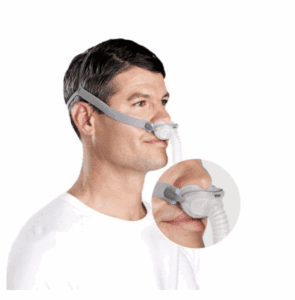
These masks rest just under your nostrils, with tiny cushions that deliver air directly. They’re about as close as you’ll get to “nothing on your face.”
Great fit for:
- Side sleepers who flip around all night
- Stomach sleepers who need a low profile
- People with beards (less surface to seal = fewer leaks)
- Anyone who feels trapped in bulky masks
Why they work: Less contact with your face, less weight pulling on straps, and fewer pressure marks in the morning.
Trade-offs: At very high pressures, the direct airflow can feel intense. And if you’re a chronic mouth breather, nasal pillows alone won’t cut it.
👉 I once read a post from a guy who said, “Nasal pillows saved my marriage.” His wife had been losing sleep from the hissing leaks of his full-face mask. Switching to pillows quieted everything down.
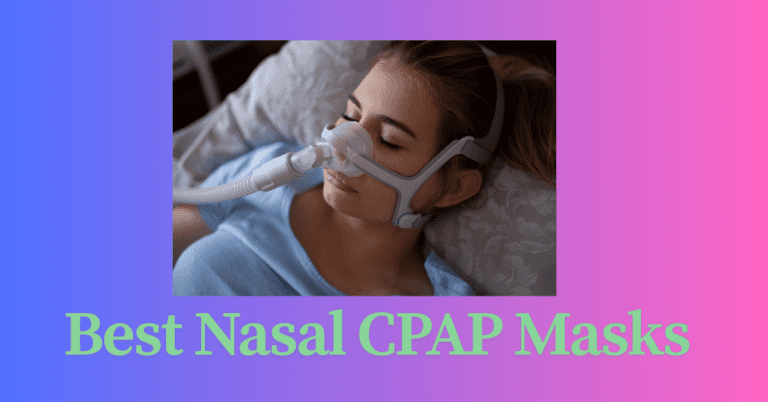
Nasal Masks: The All-Rounder 👃
If nasal pillows are like running shoes and full-face masks are like hiking boots, nasal masks are your everyday sneakers. They balance comfort, seal, and stability without going to extremes.
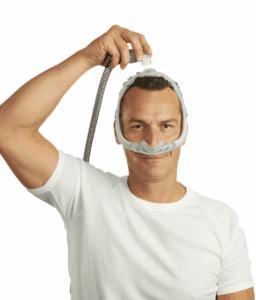
They sit over your nose (covering more area than pillows, less than a full face) and direct airflow into the nasal passages.
Great fit for:
- Nose breathers who want a dependable seal
- Back or side sleepers
- People who read or watch TV before bed (most nasal masks work fine with glasses)
Why they work: They’re comfortable at moderate pressures, forgiving if you move around, and less claustrophobic than a full-face.
Trade-offs: If your mouth falls open, you’ll lose therapy. Many people solve this with a chin strap — simple, but it takes some trial and error.
👉 A woman in Wisconsin told me she fought her full-face mask for six months. Switching to a nasal mask plus a chin strap finally gave her leak-free nights.
Full Face Masks: The Heavy-Duty Option 😮
Full-face masks cover both your nose and mouth. They look intimidating, but for many people, they’re the only mask that truly works.
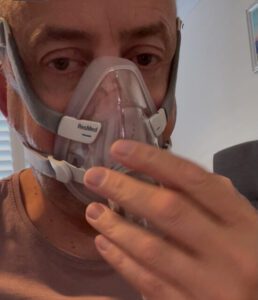
I’ve used the ResMed F20 full face mask for over ten years. For me, it’s the one that stuck. Stable, reliable, and perfect for the way I breathe.
Great fit for:
- Mouth breathers
- People with frequent allergies or colds
- Back sleepers
- Anyone at higher pressures who needs a rock-solid seal
Why they work: They don’t care whether you’re breathing through your nose or mouth — therapy stays effective. And at high pressures, they stay sealed better than smaller masks.
Trade-offs: Bulkier, heavier, and more likely to leak into the eyes if not fitted just right. Side and stomach sleepers usually struggle with them.
👉 In one CPAP forum, a guy said, “I hated how it looked, but my AHI dropped from 30 to 2 overnight with a full-face mask. That’s when I stopped caring about the bulk.”
Here’s a quick way to narrow it down:
- If you want “invisible” gear: Go nasal pillows
- If you want balance: Go nasal mask
- If you want reliability no matter how you breathe: Go full face
It’s less about the mask type itself and more about how you live and sleep. Your mask should fit into your life — not force you to change it.
No matter the type, masks need care. A dirty or worn-out cushion can cause leaks, irritation, and lost therapy.
I keep it simple with three golden rules:
- Clean the cushion daily. Oils from your skin ruin seals.
- Do a deeper wash weekly. Warm water, mild soap, air dry.
- Replace parts regularly. Most cushions last 1–3 months; straps stretch out sooner than you think.
💡 Want to see what I use? Here’s my full list of CPAP Cleaning Supplies.
FAQs About CPAP Mask Types ❓
Q: Can I use one mask for travel and another for home?
A: Absolutely. Many people use nasal pillows for travel (small and packable) and a different mask at home.
Q: What if my mask feels too tight?
A: Looser is usually better. Over-tightening collapses the cushion and causes leaks.
Q: Do I need to tell my doctor if I want to switch masks?
A: Yes — most insurance requires a prescription update for a different mask type.
Q: My partner says my mask is loud. Is that normal?
A: Some vents are noisier than others. If it’s bothering them, try a mask with diffused venting or add a mask liner.
Final Thoughts: Masks Are Like Relationships 🎯
The truth is, there’s no single “best” CPAP mask. There’s only the one that works for you.
Think of it like relationships: some people thrive with dependable “workhorses” (full-face masks). Others want freedom and minimalism (nasal pillows). Most land somewhere in between (nasal masks).
For me, it was love at first fit with the ResMed F20. For you, it might take a little trial and error. Don’t get discouraged. Once you find the right mask, CPAP goes from a nightly battle to something you barely notice.
👉 Still shopping around? Check out my Best CPAP Mask Roundup for specific recommendations.
⚠️ MEDICAL DISCLAIMER This blog provides general information only and is not a substitute for professional medical advice, diagnosis, or treatment. Sleep apnea is a serious condition, and CPAP equipment should be used under proper medical supervision. Always consult your doctor or sleep specialist before starting, stopping, or changing any therapy. I share personal experiences as a CPAP user, not as a medical professional. Individual results vary. For medical guidance, please consult a qualified clinician or the American Academy of Sleep Medicine (aasm.org).