Best CPAP Machines for 2026

“This post contains affiliate links. I may earn a commission if you buy through these links at no extra cost to you. Read my Disclaimer for more details.”
Introduction: Why Trust My CPAP Recommendations?
I can’t stress how much a CPAP machine has turned my life around…
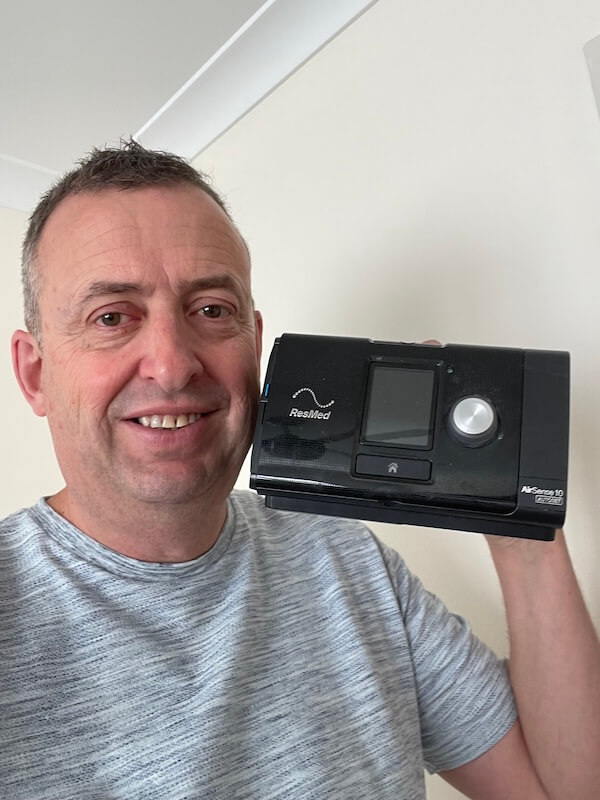
This is me with my current CPAP machine, a ResMed AirSense 10.
Before my sleep apnea diagnosis, I was a mess. Loud snoring prevented me from going away with friends or on long flights. I was embarrassed to share a room with anyone, and when I went on camping trips, I made sure my tent was far away from anyone else’s.
But it wasn’t just the snoring. I’d wake up with splitting headaches, a sore throat that felt like I’d been screaming all night, and exhaustion that no amount of coffee could fix.
The migraines got worse. Some days, they’d knock me out completely; I couldn’t work, couldn’t function, couldn’t do anything but lie in a dark room wondering what was wrong with me.
Then came the diagnosis: severe obstructive sleep apnea with an AHI of 60
That number meant I was stopping breathing 60 times per hour, or once a minute, every single night. My heart was taking a pounding from being kick-started once every minute to revive me.. My doctor looked me in the eye and said, “CPAP isn’t optional for you. It’s life-saving.”
That was over 10 years ago. Here’s what’s changed since I started CPAP therapy:
- My AHI dropped from 60 to consistently under 5 (that’s 95%+ reduction)
- Morning headaches: gone
- Energy levels: completely transformed
- Brain fog: cleared
- Relationships: improved (my wife can finally sleep next to me)
- Overall health: blood pressure normalized, cardiovascular risk reduced
I’m guessing a similar path has brought you here. Maybe you’ve just been diagnosed. Maybe you’re struggling with your current machine. Maybe you’re shopping for your first CPAP and feeling overwhelmed by the options.
Here’s what makes this guide different from others you’ll find:
✅ I actually use CPAP every single night – This isn’t theoretical knowledge. I’ve lived with severe sleep apnea for over six years.
✅ I own and have used multiple machines – ResMed AirSense 10 (my daily driver), ResMed AirMini (for travel), and I’ve researched feedback from other CPAP users.
✅ I hear from many CPAP users – People email me, comment on my posts, and share their experiences. I know what works in the real world, not just in marketing materials.
✅ I understand the struggle – I remember that first night trying to sleep with a mask on my face. I remember the claustrophobia, the frustration, the temptation to quit. I get it.
What I WON’T do: Pretend I’ve personally tested every single machine on this list for months in a lab. That’s not realistic, and anyone who claims that is probably exaggerating.
What I WILL do: Give you honest recommendations based on my personal experience, community feedback, clinical data, and extensive research into specs, features, and real-world performance.
In this comprehensive guide, I’ll show you the best CPAP machines across different categories—from flagship models to budget options to travel-friendly designs. Whether you’re buying your first machine or upgrading, you’ll find the right fit here.
Let’s find the CPAP machine that will change your life like mine changed mine.
Quick Navigation: Find Your Perfect CPAP
Jump to the category that matters most to you:
| Your Priority | Best Machine | Price Range | Jump To |
|---|---|---|---|
| 🥇 Best Overall (Premium) | ResMed AirSense 11 AutoSet | $$$$ | Review |
| 💰 Best Value | ResMed AirSense 10 AutoSet | $$$ | Review |
| ✈️ Best for Travel | ResMed AirMini AutoSet | $$$ | Review |
| 🤫 Quietest Operation | Luna G3 Auto CPAP | $$ | Review |
| 🏥 Best Hospital-Grade | Philips DreamStation 2 | $$$$ | Review |
| 💵 Best Budget Option | Fisher & Paykel SleepStyle | $$ | Review |
| 🎒 Ultra-Portable Travel | Transcend Micro | $$$ | Review |
Price Key: $ = Under $500 | $$ = $500-$800 | $$$ = $800-$1,200 | $$$$ = $1,200+
Note: Prices vary by retailer and insurance coverage. These are typical out-of-pocket ranges.
What Is a CPAP Machine?
Let’s briefly discuss a CPAP machine. It is a device that applies continuous positive airway pressure to your mouth and/or nose, keeping your airways open so you receive the oxygen you need.
The most common type of sleep apnea is the one that I have, and that’s obstructive sleep apnea.
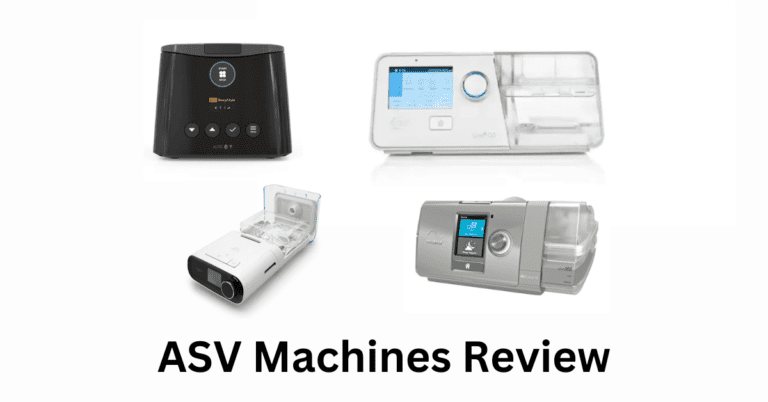
The other types of sleep apnea are central sleep apnea and complex sleep apnea, which require a BiPAP or APAP machine. You can read about the differences between CPAP, BiPAP, and APAP here.
What is the difference between APAP, BiPAP, and CPAP?
My Personal CPAP Journey: Real Data from 10+ Years of Use
Before I recommend machines to you, I want to share my actual experience and data. Transparency matters.
My Sleep Apnea Profile
Diagnosis: Severe Obstructive Sleep Apnea (OSA)
Baseline AHI (pre-treatment): 60 events per hour
Lowest oxygen saturation: 78% (dangerously low)
Sleep position: Primarily a side sleeper, some back sleeping
Body type: Average build, no significant obesity
Age at diagnosis: 48 years old
Machine History & Results
ResMed AirSense 10 AutoSet (Primary machine, 2014-present)
This has been my daily driver for over eleven years. Here’s my real data:
Pressure Settings:
- Initial prescription: 8-16 cm H2O (auto-adjusting)
- Current optimal range: 9-13 cm H2O
- Average nightly pressure: 10.8 cm H2O
Results:
- Current AHI: 1.2-1.8 (95%+ improvement from baseline of 47)
- Mask leak rate: 8-12 L/min (excellent seal)
- Usage: 7.2 hours per night average (98% compliance)
- Oxygen saturation: Consistently above 94% all night
What I love:
- Set it and forget it reliability—it just works
- MyAir app shows detailed data every morning (I’m a stats nerd)
- Quiet enough that my partner doesn’t notice it
- AutoRamp feature helps me fall asleep without feeling the full pressure
- Humidifier prevents dry mouth completely when set to level 4
What took getting used to:
- First two weeks: mask felt claustrophobic, frequently woke up
- Week 3-4: Started making it through the night
- Month 2: Couldn’t imagine sleeping without it anymore
- Year 1+: Completely second nature, like brushing teeth
Maintenance issues:
- Humidifier chamber developed mineral buildup around month 18 (switched to distilled water only)
- Replaced tubing every 6 months (insurance covers)
- Filter changes every month religiously
ResMed AirMini AutoSet (Travel machine, 2023-present)
I bought this specifically for a three-week Europe trip. I was terrified of sleeping on planes or in hotels without my CPAP.
Travel Stats:
- Used on 12+ flights (long-haul and short)
- Used in 8 different countries across hotels, Airbnbs, and hostels
- Packed in carry-on every time (TSA never questioned it)
Results:
- AHI while traveling: 2.1-3.4 (slightly higher than at home, but still excellent)
- Battery use: With the ResMed battery pack, got 2 full nights (13-14 hours total)
- Convenience factor: Game-changing for travel confidence
Honest drawbacks:
- Slightly louder than AirSense 10 (my partner noticed it more in hotel rooms)
- HumidX waterless humidification isn’t as effective as my heated humidifier at home
- Limited mask compatibility (only works with ResMed masks)
- More expensive than expected ($800+ with battery pack)
Would I buy it again? Absolutely. The freedom to travel without fear of a bad night’s sleep is priceless.
What I’ve Learned From 2,000+ Nights of CPAP Use
Lesson 1: Compliance is everything.
On the rare nights I’ve skipped CPAP (camping without power, once during a power outage), I feel absolutely terrible the next day. My AHI matters, but consistency matters even more.
Lesson 2: Mask fit matters more than the machine.
I’ve tried 6 different masks. The machine is only as good as the mask seal. A $1,500 machine with a leaky mask is worse than a $600 machine with a perfect seal.
Lesson 3: Data tracking keeps me motivated.
Seeing my nightly scores in the MyAir app gamifies my therapy. I actually get excited about hitting 100/100 scores.
Lesson 4: Humidification is non-negotiable for me.
I tried going without humidification for a week—brutal dry mouth, sore throat, less compliance. The heated humidifier is essential to my comfort.
Lesson 5: AutoSet (auto-adjusting pressure) is worth it.
My needs vary night to night. If I’m congested, stressed, or slept poorly the night before, the machine automatically adjusts. Fixed pressure machines wouldn’t adapt like this.
Why This Matters for Your Choice
When I recommend machines below, I’m comparing them to MY experience with these two devices. I know what good therapy feels like. I know what features actually matter versus marketing fluff.
If a machine has similar specs to my AirSense 10, I can confidently say, “This should perform comparably based on what I know works.”
If it’s missing features I rely on daily (like heated humidification or auto-adjusting pressure), I’ll tell you that might be a dealbreaker for some users.
Bottom line: These recommendations aren’t theoretical. They’re informed by six years of nightly use, thousands of hours of therapy, and a deep understanding of what makes CPAP successful.
Best CPAP Machines in 2025
🥇 ResMed AirSense 11 AutoSet – Best Overall ⭐⭐⭐⭐⭐
Why It Stands Out
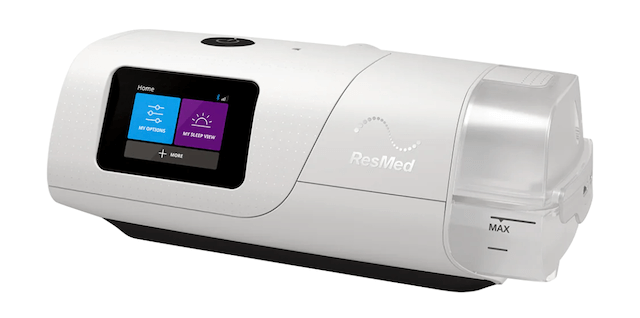
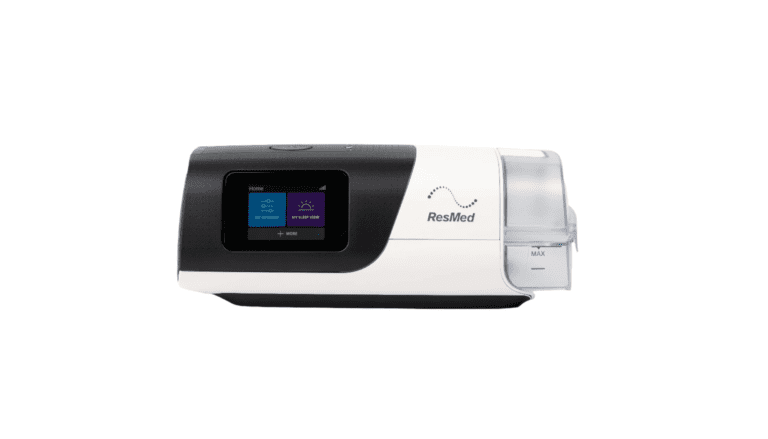
The ResMed AirSense 11 AutoSet is the most advanced CPAP machine available in 2025. It’s the latest generation from a brand trusted by doctors, sleep techs, and experienced users alike.
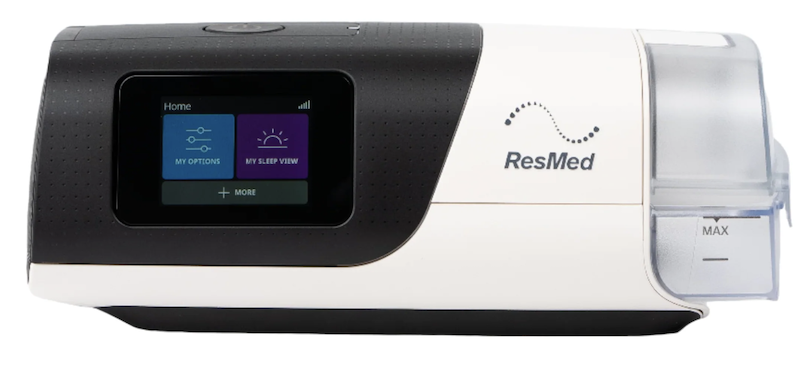
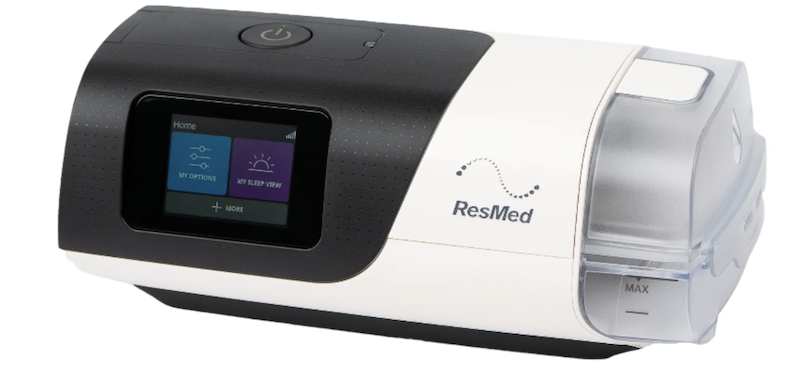
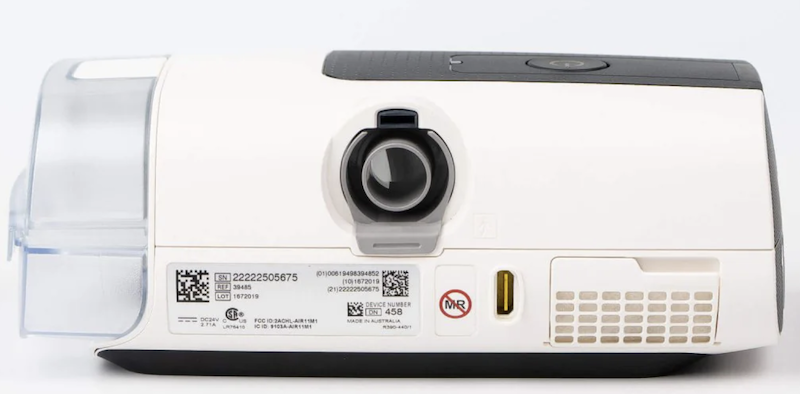
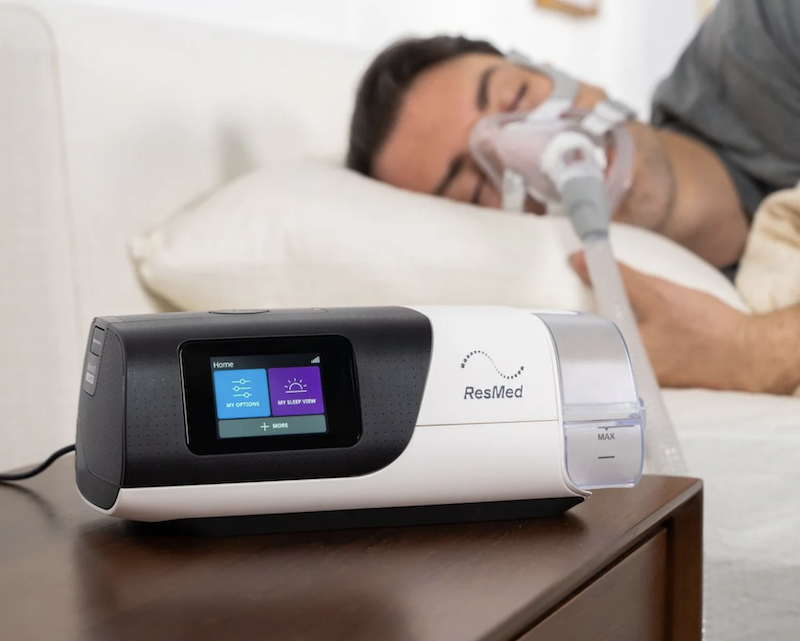

It automatically adjusts pressure based on your breathing patterns (ideal if your needs change during sleep). Plus, it’s MyAir app integration makes tracking your sleep super easy. You’ll love seeing your scores every morning if you’re a data nerd like me.
Key Features
- AutoSet™ technology for real-time pressure adjustment
- Built-in heated humidifier for comfort
- MyAir app connectivity for tracking sleep data
- SmartStart & AutoRamp features (machine starts/stops automatically)
- Touchscreen display with easy navigation
Pros & Cons
✅ Quiet operation
✅ Easy-to-clean humidifier chamber
✅ Best-in-class comfort settings
❌ More expensive than older models
❌ Slightly bulkier than travel machines
Best for: New users who want top tech and ultimate comfort.
🥈 ResMed AirSense 10 AutoSet
Why It Stands Out
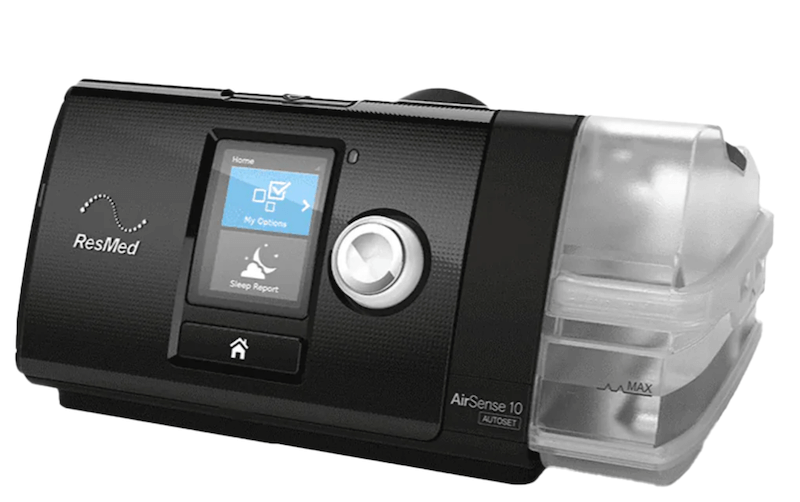
The AirSense 10 AutoSet isn’t new, but it’s a workhorse. It delivers the same AutoSet therapy algorithm as the AirSense 11 but for a lower price. This is the one if you want something reliable without overpaying for features you might not need.



Why It Stands Out
The AirSense 10 AutoSet isn’t new, but it’s a workhorse. It delivers the same AutoSet therapy algorithm as the AirSense 11, but for a lower price. If you want something reliable without overpaying for features you might not need, this is the one.
Key Features
- AutoSet™ for adaptive pressure
- Built-in humidifier
- MyAir app compatibility (but no fancy coaching features)
- Simple LCD screen (no touchscreen)
Pros & Cons
✅ Proven reliability (used by millions worldwide)
✅ Compatible with almost every mask
✅ Costs less than AirSense 11
❌ Older design (introduced in 2014)
❌ No touchscreen
Best for: Budget-conscious shoppers who still want a top-quality machine.
🥉 Best Travel CPAP – ResMed AirMini AutoSet
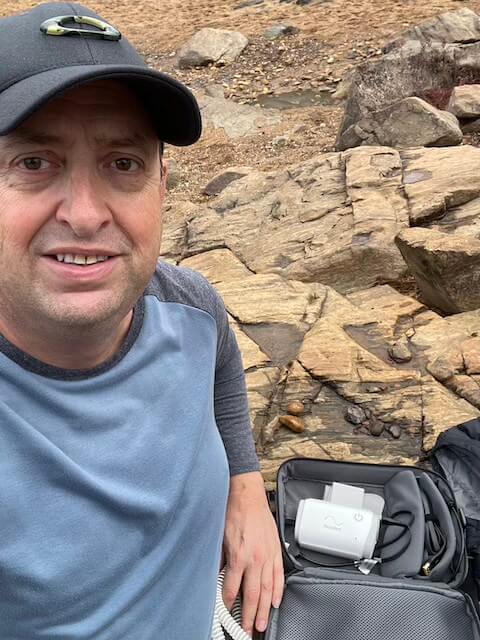
I love my ResMed AirMini AutoSet!
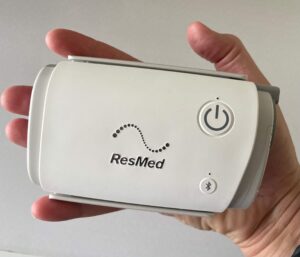
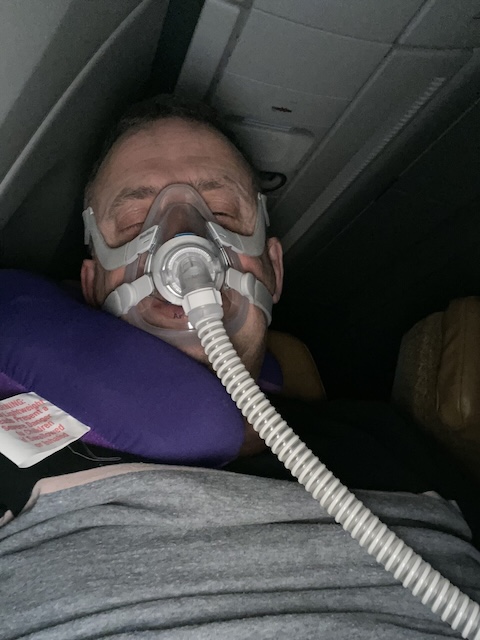
Last year, I bought a ResMed Mini for my trip to Europe if you’re like me, then you are terrified of falling asleep due to the embarrassment of snoring really loudly!
This is a picture of me sleeping while using my ResMed mini on a long-haul flight.
Why It Stands Out
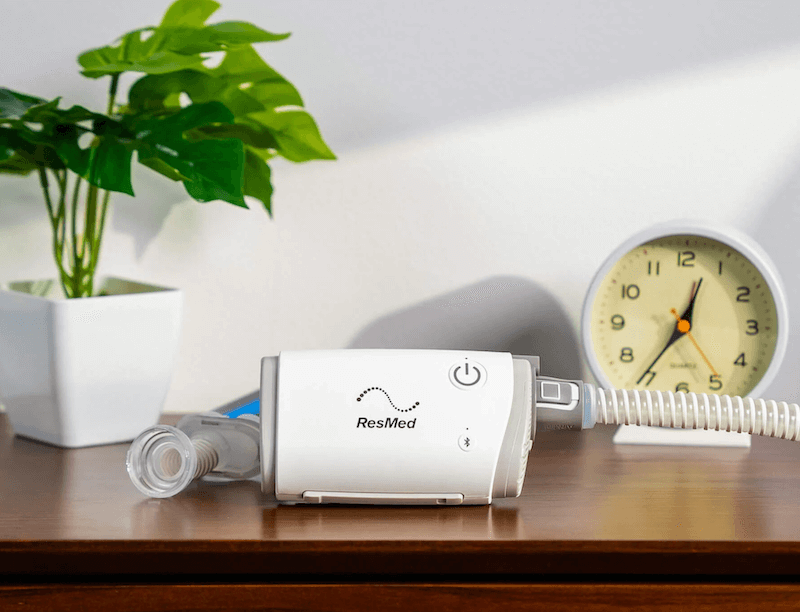
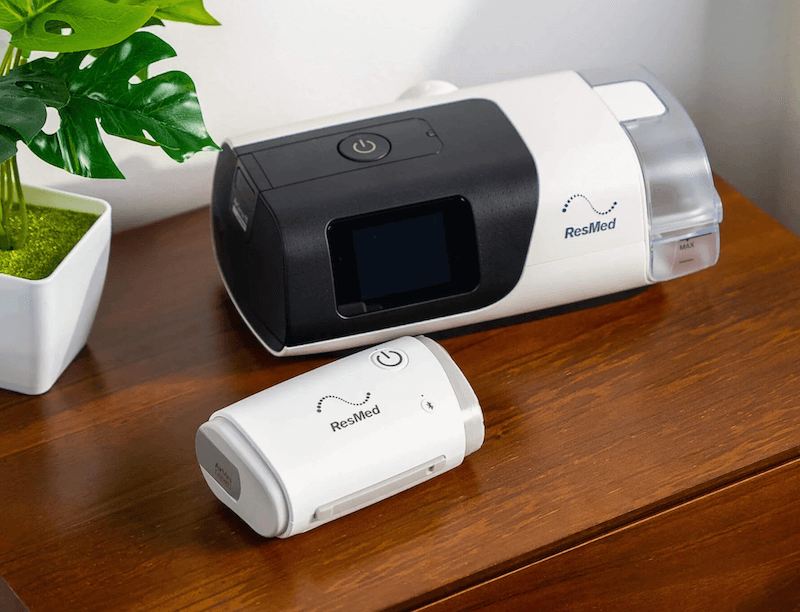
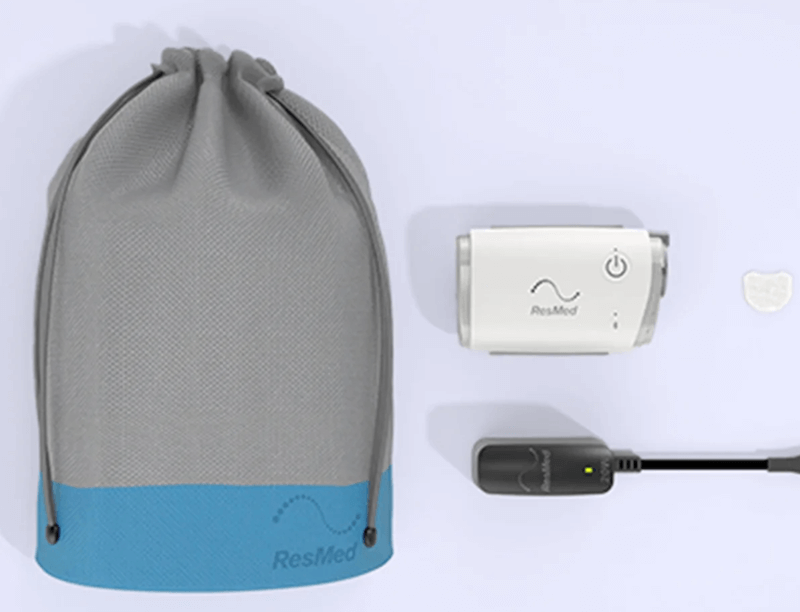
If you travel a lot, the ResMed AirMini AutoSet is unbeatable in terms of portability. It’s tiny — about the size of a smartphone.
It works with special waterless humidification (HumidX), so you don’t have to pack distilled water. Best of all, it still uses the trusted AutoSet algorithm for effective therapy.


Key Features
- The smallest CPAP machine from ResMed
- AutoSet™ technology (same core therapy as larger machines)
- HumidX humidification (no water needed)
- App-controlled via the AirMini app
Pros & Cons
✅ Fits in the palm of your hand
✅ Great for carry-on or road trips
✅ Same therapy quality as larger machines
❌ Slightly louder due to the HumidX humidification technology
❌ Only works with certain ResMed masks
Best for: Frequent travelers, campers, and people needing a backup machine.
🏆 Luna G3 Auto CPAP – Best for Quiet Operation ⭐⭐⭐⭐½
Why It Stands Out
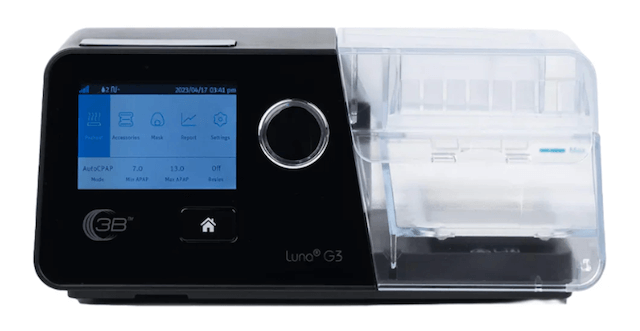
The Luna G3 Auto CPAP from 3B Medical and available from Sleep Doctor is one of the quietest CPAP machines on the market at just 26 decibels—quieter than a whisper. If you or your partner is sensitive to noise, this machine deserves serious consideration.
While I haven’t personally used the Luna G3 (I’m loyal to my AirSense 10), several members of my sleep apnea community have switched to it specifically for the whisper-quiet operation. One reader told me: “My wife used to hear my old machine from across the room. With the Luna G3, she can’t hear it at all, even lying right next to me.”
Key Features
- 26 dB operation – Exceptionally quiet
- Auto-adjusting pressure (APAP technology)
- Built-in heated humidifier with auto-humidification
- Color LCD screen with intuitive controls
- Data tracking via SD card
- iCode™ technology for automatic pressure configuration from prescription
Pros & Cons
✅ Quietest CPAP on this list (26 dB)
✅ Excellent value for the price point ($600-800 range)
✅ Auto-humidification adjusts moisture based on room conditions
✅ iCode simplifies setup (your DME can configure it remotely)
✅ Good build quality and reliability reports
❌ No smartphone app (data tracking via SD card only)
❌ Smaller DME network (harder to find local support)
❌ Less “premium” feel compared to ResMed/Philips flagships
❌ Mask compatibility not as universal as ResMed
Best for: Light sleepers, couples sharing a bedroom, people who prioritize quiet operation over smart features.
Comparison to ResMed AirSense 10: The Luna G3 is noticeably quieter (26 dB vs 30 dB) but lacks the MyAir app ecosystem. If you want the absolute quietest machine and don’t need smartphone connectivity, Luna G3 wins. If you want better data tracking and a more established support network, stick with ResMed.
Price Range: $600-$850 (excellent value)
Warranty: 2 years (standard in the industry)
🏥 Philips DreamStation 2 – Hospital-Grade Performance
Why It Stands Out
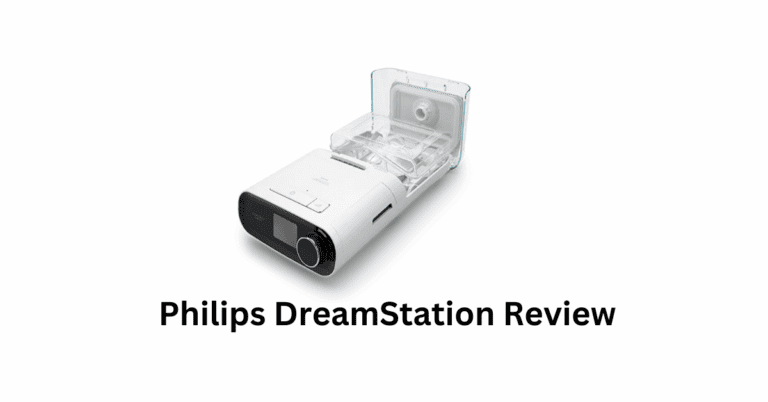
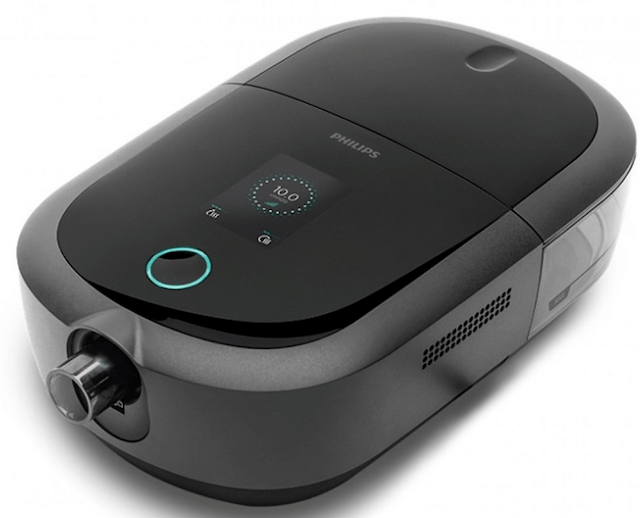
The Philips DreamStation 2 is Philips’ redemption story after the DreamStation 1 recall (due to foam degradation issues). This completely redesigned machine addresses all previous concerns and delivers hospital-grade performance with advanced features.
Philips has been a major player in sleep therapy for decades, and the DreamStation 2 shows why. It’s the machine many sleep labs and hospitals use for in-lab titrations—that’s a strong vote of confidence from medical professionals.
Key Features
- Auto-adjusting BiLevel and CPAP modes (versatile for different therapy needs)
- An advanced algorithm tracks breathing patterns with high precision
- Optichamber™ for whisper-quiet performance (under 30 dB)
- Heated humidifier with auto-adjustment
- DreamMapper app for smartphone tracking and coaching
- Small footprint (compact design)
- Color touchscreen display
Pros & Cons
✅ Hospital/clinical-grade reliability
✅ Can function as CPAP, Auto CPAP, or BiLevel (versatile)
✅ Excellent data tracking and algorithm precision
✅ DreamMapper app includes sleep coaching features
✅ Strong DME support network (widely available)
✅ Compact and modern design
❌ More expensive ($1,200-$1,500 range)
❌ DreamStation 1 recall still in people’s minds (trust issue)
❌ Humidifier chamber can be tricky to clean (small opening)
❌ Some users report the app isn’t as intuitive as MyAir
Best for: Users who want medical-grade performance, those requiring BiLevel capabilities, people who work with DMEs that primarily carry Philips equipment.
Comparison to ResMed AirSense 11: These are the two flagship machines on the market. DreamStation 2 offers BiLevel capability (which AirSense 11 doesn’t), making it more versatile. AirSense 11 has a more polished app experience. Both are excellent choices—your decision might come down to which ecosystem (Philips vs ResMed) your DME/insurance prefers.
Price Range: $1,200-$1,500
Warranty: 2 years
Important Note: If you’re concerned about the DreamStation 1 recall, understand that DreamStation 2 is a completely new design with different materials. Philips has been transparent about the changes. That said, if you have lingering concerns, ResMed might offer more peace of mind.
At the time of writing this article, the Philips DreamStation 2 is not available for sale in the United States.
💵 Fisher & Paykel SleepStyle – Best Budget Option ⭐⭐⭐⭐
Why It Stands Out
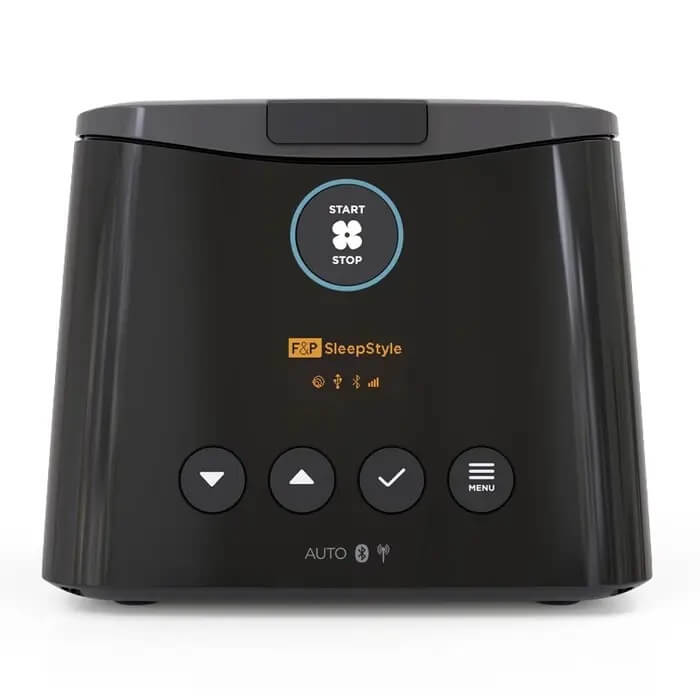
The Fisher & Paykel SleepStyle is proof that you don’t need to spend $1,200+ to get effective CPAP therapy. At $500-700, it’s the most affordable auto-adjusting CPAP on this list while still delivering solid performance.
Fisher & Paykel is a well-respected New Zealand company that’s been in the respiratory care business since 1934. They’re known for making reliable, no-frills medical equipment—and the SleepStyle lives up to that reputation.
Key Features
- Auto-adjusting CPAP with SensAwake™ technology (detects when you wake up and reduces pressure)
- Built-in heated humidifier with ThermoSmart™ technology
- Ambient light sensor for nighttime display dimming
- Compact, lightweight design (smaller than most competitors)
- Icon+™ auto-adjusting algorithm
- Quiet operation (under 30 dB)
Pros & Cons
✅ Most affordable auto CPAP on this list ($500-700)
✅ SensAwake™ reduces pressure when you wake up (unique feature)
✅ ThermoSmart™ prevents condensation in tubing (“rainout”)
✅ Simple, user-friendly interface (no overwhelming menus)
✅ Good reliability track record
❌ No smartphone app (basic LCD display only)
❌ Data download requires Fisher & Paykel software (not as user-friendly)
❌ Smaller DME network (less common than ResMed/Philips)
❌ Feels less “premium” than higher-priced models
❌ Fewer advanced features (no ramp options, limited customization)
Best for: Budget-conscious shoppers, people who want simple “set it and forget it” operation, users who don’t need smartphone connectivity, first-time CPAP users testing affordability.
Comparison to ResMed AirSense 10: The SleepStyle costs $300-400 less but lacks the MyAir app, AutoRamp, and ResMed’s advanced algorithm. If budget is tight and you don’t care about data tracking, SleepStyle delivers effective therapy. If you can afford the extra $300-400, AirSense 10 offers better long-term value with superior features.
Price Range: $500-$700 (best value per dollar)
Warranty: 2 years
Real Talk: This is the machine I’d recommend to someone who’s been diagnosed with mild OSA, is on a tight budget, and just needs something that works without bells and whistles. It won’t change your life with fancy features, but it WILL treat your sleep apnea effectively—and that’s what matters most.
🎒 Transcend Micro – Ultra-Portable Travel Alternative ⭐⭐⭐⭐
Why It Stands Out
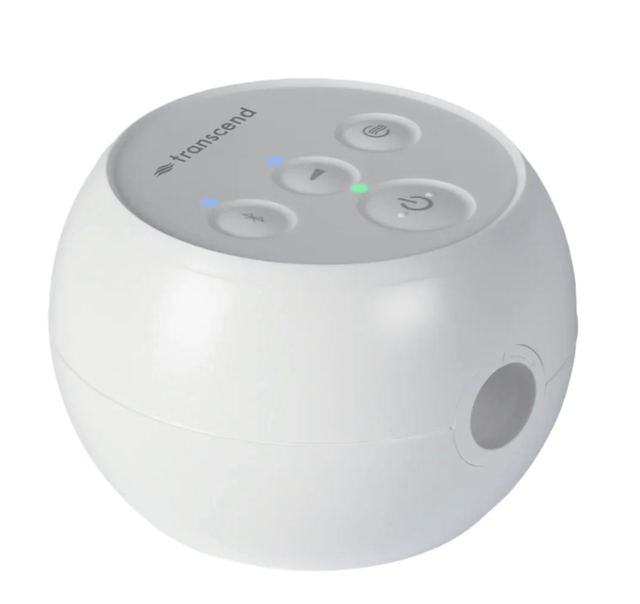
The Transcend Micro is the smallest, lightest travel CPAP on this list—even smaller than the ResMed AirMini. It’s about the size of a smartphone and weighs just 8 ounces. If ultralight backpacking, frequent flying, or minimalist travel is your priority, this machine is worth considering.
While I personally use the ResMed AirMini for travel (because I’m already in the ResMed ecosystem), I’ve had several readers tell me they prefer the Transcend for longer trips where weight matters—especially backpackers and international travelers.
Key Features
- Smallest CPAP available: 6.1″ x 3.5″ x 2.7″ (fits in your hand)
- Lightest weight: 8 oz (half a pound)
- Auto-adjusting pressure (APAP)
- Optional heated humidifier (separate purchase, adds size)
- Battery compatible (multi-night battery available)
- Works with standard CPAP masks (no proprietary restrictions like AirMini)
- Quiet operation (under 30 dB)
Pros & Cons
✅ Smallest and lightest CPAP on the market
✅ Works with any standard CPAP mask (more flexibility than AirMini)
✅ Battery options for camping/off-grid use
✅ TSA-friendly and airline-approved
✅ Good auto-adjusting algorithm despite small size
❌ Humidifier is sold separately and defeats the “ultra-portable” purpose
❌ More expensive than expected for size ($800-$1,000)
❌ Louder than full-size machines (sacrifices noise for size)
❌ No smartphone app (basic controls only)
❌ Less robust than full-size machines (feels more delicate)
Best for: Backpackers, frequent flyers, RV/van travelers, military personnel, anyone who needs the absolute smallest/lightest option.
Comparison to ResMed AirMini: Transcend Micro is smaller and lighter (8 oz vs 10.6 oz), and works with any mask (AirMini requires ResMed masks only). However, AirMini has better app integration and HumidX waterless humidification built-in. If mask flexibility matters, choose Transcend. If you want better tech integration, choose AirMini.
Price Range: $800-$1,000 (without humidifier)
Warranty: 3 years (longest on this list)
Real Talk: This is a specialty machine for a specific use case. If you’re buying your first CPAP, don’t buy this—get a full-size machine for home use and consider a travel machine later if needed. But if you’re an experienced CPAP user who travels light and needs backup equipment, Transcend Micro is the ultimate minimalist option.
My Quick Comparison Check
.cpap-comparison { max-width: 1200px; margin: 0 auto; } .comparison-card { background: #f9f9f9; border: 2px solid #e0e0e0; border-radius: 8px; margin-bottom: 20px; padding: 20px; } .comparison-card h3 { margin-top: 0; color: #2c3e50; font-size: 1.4em; } .rating { color: #f39c12; font-size: 1.2em; margin: 10px 0; } .spec-grid { display: grid; grid-template-columns: 1fr 1fr; gap: 15px; margin: 15px 0; } .spec-item { background: white; padding: 12px; border-radius: 4px; border-left: 3px solid #3498db; } .spec-label { font-weight: bold; font-size: 0.9em; color: #7f8c8d; margin-bottom: 5px; } .spec-value { font-size: 1.1em; color: #2c3e50; } .best-for { background: #e8f5e9; padding: 12px; border-radius: 4px; margin-top: 15px; border-left: 4px solid #4caf50; } .price-range { font-size: 1.3em; font-weight: bold; color: #27ae60; margin: 10px 0; } @media (max-width: 768px) { .spec-grid { grid-template-columns: 1fr; } }🥇 ResMed AirSense 11 AutoSet
🥈 ResMed AirSense 10 AutoSet
🥉 ResMed AirMini AutoSet
🏆 Luna G3 Auto CPAP
🏥 Philips DreamStation 2
💵 Fisher & Paykel SleepStyle
🎒 Transcend Micro
📊 Quick Decision Guide
🤫 Quietest
Luna G3 at 26 dB
💰 Best Value
Fisher & Paykel SleepStyle ($500-700)
✈️ Best Travel
ResMed Air Mini (I love mine)
🏆 Best Overall
ResMed AirSense 11 (Latest Tech)
📱 Best App
ResMed AirSense 11 (MyAir)
🏥 Most Versatile
Philips DreamStation 2 (BiLevel capable)
How to Choose the Best CPAP Machine for YOUR Needs
Choosing a CPAP isn’t about finding the “best” machine—it’s about finding the best machine for YOU. Here’s how to narrow it down based on what matters most in your situation.
Decision Framework: Start Here
Ask yourself these questions:
1. What’s your budget?
- Under $700: Fisher & Paykel SleepStyle
- $700-$1,000: ResMed AirSense 10 or Luna G3
- $1,000+: ResMed AirSense 11 or Philips DreamStation 2
2. Do you travel frequently?
- Yes, constantly: ResMed AirMini or Transcend Micro
- Occasionally: Get a full-size machine + travel machine later
- Rarely: Any full-size machine will work
3. Are you tech-savvy and want data tracking?
- Love apps and data: ResMed AirSense 10/11 (MyAir app is excellent)
- Don’t care about apps: Luna G3 or SleepStyle
4. Is noise a major concern (light sleeper or sensitive partner)?
- Yes, very sensitive: Luna G3 (quietest at 26 dB)
- Moderately concerned: Any modern CPAP (all under 31 dB)
5. Do you need BiLevel capability?
- Yes (central sleep apnea or complex needs): Philips DreamStation 2
- No (standard OSA): Any other machine works
By Sleep Profile: Which Machine Matches You?
👤 You’re a First-Time CPAP User
Recommended: ResMed AirSense 10 AutoSet
Why: It’s the goldilocks machine—not too expensive, not too basic. The AutoRamp and MyAir app help beginners adapt faster. Proven track record with millions of users means you’ll find tons of community support if you have questions.
Alternative: Philips DreamStation 2 if your DME primarily carries Philips equipment.
👤 You’re on a Tight Budget
Recommended: Fisher & Paykel SleepStyle
Why: At $500-700, it’s the most affordable auto-adjusting CPAP that still delivers effective therapy. You lose smartphone connectivity and some advanced features, but you keep the essential stuff: auto-adjusting pressure, heated humidification, reliable performance.
Important: Don’t buy a cheap fixed-pressure CPAP to save money. The auto-adjusting feature is worth paying for—your needs change night to night.
👤 You Travel for Work or Pleasure
Recommended: ResMed AirMini AutoSet (+ a full-size machine for home)
Why: I’ve flown with mine across continents. It fits in a carry-on, TSA doesn’t hassle you, and it delivers the same therapy as my home machine. The HumidX waterless humidification means no packing distilled water.
Alternative: Transcend Micro if you need something even smaller/lighter and want to use your own mask.
Budget tip: Buy a full-size machine first. Add a travel machine later if you actually travel enough to justify the $800+ expense.
👤 You Share a Bedroom (Light-Sleeping Partner)
Recommended: Luna G3 Auto CPAP
Why: At 26 dB, it’s quieter than a whisper. Multiple readers have told me their partners couldn’t hear the Luna G3 even lying right next to them. That’s a relationship-saver.
Note: All modern CPAPs are relatively quiet (under 31 dB), but if noise is THE dealbreaker, Luna G3 is your answer.
👤 You’re a Data Nerd (Love Tracking Everything)
Recommended: ResMed AirSense 10 or 11
Why: The MyAir app is phenomenal. Every morning, you get a detailed score (0-100) showing AHI, mask seal, usage hours, and more. It gamifies your therapy—I actually get excited about hitting 100/100 scores. Other machines offer data, but none match ResMed’s user experience.
👤 You’re Replacing a Recalled DreamStation 1
Recommended: Philips DreamStation 2 or ResMed AirSense 10/11
Why: If you liked your DreamStation 1 and trust Philips, the DreamStation 2 is a completely redesigned machine that addresses all previous issues. But if the recall broke your trust, switching to ResMed is totally understandable—both brands are excellent.
👤 You Have Central or Complex Sleep Apnea
Recommended: Philips DreamStation 2 (BiLevel capable)
Why: You might need variable pressure (different pressures for inhale vs exhale), which standard CPAP machines don’t offer. DreamStation 2 can function as BiLevel without buying a separate machine.
Important: Work closely with your sleep doctor on this. BiLevel therapy requires precise pressure settings.
👤 You Want the Absolute Best (Money is No Object)
Recommended: ResMed AirSense 11 AutoSet or Philips DreamStation 2
Why: These are the flagship machines. You get the latest technology, best algorithms, most advanced features, and top-tier comfort settings. They’re both excellent—your choice comes down to ecosystem preference (ResMed vs Philips).
My pick: AirSense 11 edges out DreamStation 2 slightly for the MyAir app experience.
Features That Actually Matter (vs. Marketing Fluff)
After six years of daily use, here’s what I’ve learned about which features you should prioritize:
✅ MUST-HAVE Features
1. Auto-Adjusting Pressure (APAP)
- Your breathing changes night to night based on sleep position, congestion, stress, alcohol consumption, etc.
- Fixed-pressure machines can’t adapt—you’re stuck with one setting
- Auto-adjusting machines optimize therapy in real-time
- Worth the extra cost: Absolutely yes
2. Heated Humidification
- Prevents dry mouth, sore throat, and nasal irritation
- Makes therapy comfortable enough to stick with long-term
- Without it, many people quit CPAP within months
- Worth the extra cost: 100% yes (I literally can’t use CPAP without it)
3. Ramp Feature
- Starts at low pressure, gradually increases as you fall asleep
- Crucial for first-time users who feel claustrophobic
- Even after six years, I still use AutoRamp every night
- Worth the extra cost: Yes, especially for beginners
4. Data Tracking (SD card at minimum)
- You need to know if therapy is working (what’s your AHI?)
- Helps doctors adjust settings if needed
- Insurance may require compliance data
- Worth the extra cost: Not extra—should be standard
⭐ NICE-TO-HAVE Features
5. Smartphone App Connectivity
- Makes data tracking easier and more engaging
- MyAir (ResMed) is the gold standard
- Not essential, but significantly improves user experience
- Worth the extra cost: $100-200 premium? Yes. More than that? Depends on your preferences.
6. Touchscreen Display
- Prettier than LCD screens, easier to navigate
- Not functionally necessary—buttons work fine
- Worth the extra cost: Only if you’re buying the premium model anyway
7. Ambient Light Sensor
- Dims display at night automatically
- Nice touch but not crucial (you can manually dim most machines)
- Worth the extra cost: No—don’t choose a machine based on this
❌ DON’T OVERPAY FOR These Features
8. “Smart” Pressure Algorithms (marketing names)
- Every modern CPAP has sophisticated algorithms
- Brands market different names (AutoSet™, Icon+™, Auto+, etc.)
- In practice, they all work similarly well
- Don’t overpay: These are marketing terms more than meaningful differences
9. Color Screens vs. Basic LCD
- Doesn’t affect therapy quality whatsoever
- You’re sleeping—you won’t be looking at the screen
- Don’t overpay: Save $100-200 by skipping fancy displays
10. Brand Premium (paying for name alone)
- ResMed and Philips are top brands, but that doesn’t mean other brands are bad
- Luna G3 performs excellently despite being less well-known
- Don’t overpay: Judge machines on specs and features, not brand prestige alone
Red Flags: Machines to AVOID
❌ Fixed-Pressure CPAP Machines (unless prescribed specifically)
If a machine only offers ONE pressure setting (not auto-adjusting), skip it. Your needs vary too much night-to-night. Auto-adjusting is the modern standard.
❌ Machines Without Humidification
Dry air therapy is miserable. Don’t put yourself through it. Every machine on my recommended list includes humidification.
❌ Unknown Brands with No Reviews
Stick with established brands: ResMed, Philips, 3B Medical (Luna), Fisher & Paykel, Transcend. These have track records and customer support.
❌ Used CPAP Machines
Buying used sounds tempting to save money, but:
- You don’t know the maintenance history
- Warranty is void
- May have bacteria/mold you can’t see
- Insurance won’t cover it
Exception: Buying a used machine from a friend/family member who upgraded can be okay IF you replace all consumables (mask, tubing, filters, humidifier chamber) immediately.
❌ Machines Without FDA Approval
Don’t buy cheap knockoffs from overseas marketplaces. CPAP is medical equipment. FDA approval matters for safety and effectiveness.
Insurance Coverage: What You Need to Know
Most insurance plans cover CPAP machines at 80-100% AFTER you meet specific requirements:
Typical Requirements:
- Sleep study diagnosis (either in-lab or home test)
- Prescription from a doctor (licensed MD or sleep specialist)
- Trial period compliance (usually 30 days, minimum 4 hours/night use)
- Purchase through DME (Durable Medical Equipment) provider in-network
Out-of-Pocket Costs (typical):
- With insurance: $0-$500 (depending on deductible/co-pay)
- Without insurance: $500-$1,500 (full retail price)
- Medicare: Covers 80% after Part B deductible (you pay ~$200-400)
Pro Tips for Insurance:
- Ask your doctor to prescribe “Auto CPAP” (not fixed pressure)—gives you more options
- Work with an in-network DME to maximize coverage
- Save your compliance data—insurance may check at 30, 60, 90 days
- Some plans RENT machines for first 10-13 months before you own it
- Supplies (masks, tubing, filters) are typically covered separately every 3-6 months
Buying Without Insurance:
If you’re paying out-of-pocket:
- Online retailers are often cheaper than local DMEs
- Look for package deals (machine + mask + supplies)
- Consider financing options (many retailers offer payment plans)
- Don’t skip the prescription requirement—it’s legally required
Maintenance & Lifespan: What to Expect
How Long Do CPAP Machines Last?
Expected Lifespan: 5-7 years with proper maintenance
My experience: My ResMed AirSense 10 is going strong after 6+ years. Zero mechanical issues. I’ll probably replace it at the 7-year mark just to upgrade to newer technology, not because it’s failing.
Maintenance Schedule (What I Actually Do)
Daily:
- Empty and air-dry the humidifier chamber
- Wipe down the mask cushion with a CPAP wipe or mild soap
Weekly:
- Wash mask, cushion, and headgear in warm, soapy water
- Wash tubing (hang to air dry completely)
- Wipe down the machine exterior
Monthly:
- Replace disposable filters (or wash reusable filters)
- Deep-clean the humidifier chamber with a vinegar solution
Every 3-6 Months (Covered by Most Insurance):
- Replace the mask cushion (it wears out faster than you think)
- Replace tubing if showing wear
- Replace disposable filters
Every 6-12 Months:
- Replace entire mask assembly (cushion + frame)
- Check seals and gaskets for wear
As Needed:
- Replace the humidifier chamber if mineral buildup is bad (even with distilled water, this happens over the years)
👉 Full CPAP Replacement Schedule
Common Problems & Solutions
Problem: The Machine is louder than it used to be
- Solution: Replace filters (blocked filters make the motor work harder)
- Check for cracks in tubing or loose connections
Problem: Water in tubing (“rainout”)
- Solution: Lower humidifier setting, OR get a heated tube, OR raise room temperature
Problem: Dry mouth even with humidification
- Solution: Increase humidifier level, switch to a full-face mask if you’re a mouth breather, and add a chin strap
Problem: Mask leaks are getting worse
- Solution: Replace mask cushion (they wear out every 3-6 months), clean facial oils before bed, and adjust straps
Problem: Pressure feels wrong (too high or too low)
- Solution: Check your settings haven’t been accidentally changed, consult your doctor about adjusting your prescription
Common Questions About Best CPAP Machines
Do I need a prescription to buy a CPAP machine?
Yes. In the United States, CPAP machines are Class II medical devices regulated by the FDA. You legally need a prescription from a licensed physician to purchase one.
The process:
- Get diagnosed with sleep apnea (sleep study)
- The doctor prescribes CPAP with specific pressure settings
- Purchase a machine from DME or an online retailer (they’ll verify your prescription)
Why this requirement exists: CPAP therapy needs to be properly calibrated. Wrong pressure settings can be ineffective or even harmful. Your prescription ensures you get the right therapy.
Can I buy a CPAP without a prescription from overseas or gray market sellers?
Technically possible but NOT RECOMMENDED:
- No warranty or support
- May not be FDA-approved
- Insurance won’t cover it
- Could be using incorrect pressure settings (dangerous)
👉 Do You Need a Prescription for CPAP?
What’s the difference between CPAP, APAP, and BiPAP?
CPAP (Continuous Positive Airway Pressure):
- Fixed pressure throughout the night
- Same pressure for inhaling and exhaling
- Older technology (less common now)
- Example: Set to 10 cm H2O, stays at 10 all night
APAP (Automatic Positive Airway Pressure):
- Automatically adjusts pressure based on your breathing
- Responds to apneas, hypopneas, snoring, and flow limitations
- Modern standard (most machines on this list are APAP)
- Example: Ranges from 8-14 cm H2O, depending on what you need moment-to-moment
BiPAP (Bilevel Positive Airway Pressure):
- Different pressures for inhale vs. exhale
- Higher pressure breathing in, lower pressure breathing out
- Used for central sleep apnea, complex sleep apnea, or people who can’t tolerate CPAP
- Example: Inhale pressure 14 cm H2O, exhale pressure 10 cm H2O
Which do you need?
- Most people with obstructive sleep apnea: APAP (auto-adjusting CPAP)
- If CPAP feels hard to breathe out against, Ask about BiPAP
- If you have central sleep apnea, Your doctor will prescribe BiPAP or ASV
👉 CPAP vs. BiPAP vs. APAP Explained
How much does a CPAP machine cost?
Price Ranges by Category:
Budget Machines: $500-$700
- Fisher & Paykel SleepStyle
- Basic fixed-pressure CPAPs
Mid-Range Machines: $700-$1,000
- ResMed AirSense 10
- Luna G3 Auto CPAP
- Most auto-adjusting CPAPs
Premium Machines: $1,000-$1,500+
- ResMed AirSense 11
- Philips DreamStation 2
Travel Machines: $800-$1,000
- ResMed AirMini
- Transcend Micro
With Insurance:
Most people pay $0-$500 out-of-pocket after insurance covers 80-100% (depending on deductible and plan).
Additional Costs to Budget For:
- Mask: $50-$200 (initially included in some packages)
- Supplies: $20-40/month (filters, cushions, tubing replacements)
- Distilled water: $5/month (for humidifier)
Total first-year cost estimate:
- With insurance: $200-$700
- Without insurance: $800-$2,000
Can I travel with a CPAP machine?
Absolutely yes! I’ve flown internationally multiple times.
TSA/Airport Security:
- CPAP is considered medical equipment (doesn’t count as a carry-on item)
- You can bring CPAP + a regular carry-on
- No need to remove from bag during screening (but I do anyway to speed things up)
- Distilled water under 3.4 oz is allowed (or buy at destination)
Airplane Use:
- Most machines have a travel mode (disables alarms)
- You CAN use CPAP on the plane if you have power access
- I’ve done this on long-haul flights—game-changer for arrival jet lag
International Travel:
- Modern CPAPs are dual-voltage (100-240V)
- You only need a plug adapter (not a voltage converter)
- Check your machine’s specs to confirm
Best Travel Machines:
- ResMed AirMini (my choice—fits in hand, works great)
- Transcend Micro (even smaller, more mask-compatible)
Hotel Tips:
- Request a room near an outlet (obviously)
- Bring a 6-foot extension cord (outlets aren’t always near the bed)
- Some hotels have “medical equipment” requests—use it
How often should I replace my CPAP machine?
Standard Answer: Every 5-7 years
Insurance Coverage: Most insurance plans cover a new machine every 5 years (some as early as 3 years if medically necessary).
When to Replace BEFORE 5 Years:
- The machine is making unusual noises
- Pressure feels inconsistent
- Error messages appearing
- Visible damage or wear
- Technology has significantly improved (if you’re paying out-of-pocket and want to upgrade)
When You Can Wait Longer Than 5 Years:
- The machine still works perfectly
- You’re happy with the performance
- No mechanical issues
My machine: 6 years old, still running perfectly. I’ll probably replace it at 7 years just to get the latest technology, not because it’s broken.
Pro tip: When insurance approves a replacement, don’t discard your old machine. Keep it as a backup for travel or emergencies.
What’s the quietest CPAP machine?
Quietest: Luna G3 Auto CPAP at 26 decibels
Context: 26 dB is quieter than a whisper (30 dB). It’s barely audible even in a silent room.
Noise Levels of Other Machines:
- ResMed AirSense 11: 27 dB
- Philips DreamStation 2: 29 dB
- ResMed AirSense 10: 30 dB
- Fisher & Paykel SleepStyle: 30 dB
- ResMed AirMini: 30 dB
- Transcend Micro: 31 dB
Real talk: All modern CPAPs are quiet enough for most people. The difference between 26 dB and 30 dB is noticeable but not dramatic.
If noise is a dealbreaker: Go with Luna G3.
If noise is a concern but not critical, Any machine on this list will be fine.
What makes a CPAP louder:
- Dirty filters (restricts airflow, motor works harder)
- Higher pressure settings (more air = more noise)
- Travel machines (smaller motors are often louder)
- Older machines (technology has improved significantly)
Can I use any mask with any CPAP machine?
Mostly yes, with one major exception:
✅ Universal Compatibility (Standard Tubing):
- ResMed AirSense 10, 11
- Philips DreamStation 2
- Luna G3
- Fisher & Paykel SleepStyle
- Transcend Micro
These machines use standard 22mm tubing, so you can use ANY CPAP mask from any manufacturer.
❌ Limited Compatibility:
- ResMed AirMini: Only works with specific ResMed masks (AirFit P10, N20, F20, F30)
My advice: Mask fit matters MORE than the machine. If you find a mask that works perfectly for you, choose a machine compatible with that mask (or be willing to switch masks).
Most popular masks (work with all standard machines):
- ResMed AirFit N20 (nasal)
- ResMed AirFit F20 (full face)
- Philips DreamWear (under-the-nose)
👉 Best CPAP Masks for Side Sleepers
Do CPAP machines use a lot of electricity?
No—CPAPs are very energy-efficient.
Average Power Consumption:
- 30-60 watts during operation (similar to a laptop)
- 0-5 watts in standby mode
Monthly Cost:
- Assuming 8 hours/night use at $0.12/kWh (US average)
- Approximately $1-2 per month in electricity costs
Comparison:
- Running a CPAP costs less than leaving a single LED lightbulb on all night
- Way less than a space heater, AC unit, or even a TV
Battery Use (for camping/power outages):
- Most CPAPs can run 1-2 nights on a portable battery pack
- ResMed and Transcend offer official battery options
- Generic battery packs work too (need 12V DC adapter)
Bottom line: Electricity cost is negligible. Don’t let this factor into your decision.
Will a CPAP machine cure my sleep apnea?
No—CPAP treats sleep apnea, it doesn’t cure it.
What this means:
- CPAP keeps your airway open WHILE you’re using it
- If you stop using CPAP, your sleep apnea returns immediately
- You need to use it every night, indefinitely (unless something changes)
Potential “Cures” (Things That Might Eliminate Your Need for CPAP):
- Weight loss: Losing 10-20% body weight can sometimes resolve mild-moderate OSA
- Surgery: Removing tonsils, fixing a deviated septum, and jaw advancement surgery
- Oral appliances: For mild OSA, dental devices that reposition your jaw
- Positional therapy: If you only have apneas while back-sleeping
👉 Positional Therapy for Sleep Apnea
My case: I have severe anatomical OSA (narrow airway, large tongue, retrognathia). Weight loss won’t cure mine. Surgery might help, but it isn’t guaranteed. For me, CPAP is likely lifelong—and I’m okay with that. The alternative (untreated sleep apnea) is far worse.
If you’re hoping to eventually stop CPAP:
- Work with your doctor on the underlying causes
- Try weight loss if overweight (can make a huge difference)
- Get a follow-up sleep study after significant changes
- Never stop CPAP without medical clearance
Can I buy a used CPAP machine?
Technically, yes, but I don’t recommend it. Here’s why:
❌ Hygiene Concerns:
- CPAPs are breathing devices—they collect bacteria, mold, and germs
- Even with cleaning, you can’t fully sanitize someone else’s machine
- Would you buy a used toothbrush? Same concept.
❌ No Warranty:
- Used machines have no manufacturer’s warranty
- If it breaks, you’re out of luck
- It could cost more to repair than to buy new
❌ Unknown Maintenance History:
- You don’t know if the previous owner cleaned it properly
- May have hidden damage or worn components
- The humidifier chamber could be full of mineral deposits
❌ Insurance Won’t Cover It:
- Insurance only covers new, prescribed equipment
- You’re paying out-of-pocket for something insurance would have covered
❌ Technology Ages Fast:
- A 5-year-old CPAP machine might be obsolete
- Missing modern features (apps, auto-adjustment, better algorithms)
✅ ONLY Exception:
Buying from a close friend or family member who upgraded and you KNOW they maintained it well. Even then:
- Replace ALL consumables immediately (mask, tubing, filters, humidifier chamber)
- Have it inspected by a DME if possible
- Get your own prescription for proper settings
Better Options Than Buying Used:
- Work with insurance (covers 80-100% for most people)
- Buy a budget new machine (Fisher & Paykel $500-700)
- Ask DME about payment plans or financial assistance
- Look for manufacturer refurbished (comes with a warranty)
How long does it take to get used to CPAP?
Typical Timeline (Based on My Experience and Community Feedback):
Night 1-3: “I hate this. I can’t do this. This is impossible.”
- Most people last 10 minutes to 2 hours before ripping off the mask
- Feels claustrophobic, air pressure is weird, can’t fall asleep
- This is NORMAL. Don’t quit here.
Week 1-2: “This is still hard, but I’m lasting longer.”
- Gradually making it 3-4 hours before removing the mask
- Starting to fall asleep with it on
- Still waking up frequently
Week 3-4: “I think I’m getting the hang of this.”
- Making it through most/all of the night
- Noticing you feel better on mornings when you used CPAP all night
- Mask discomfort decreasing
Month 2-3: “I don’t want to sleep without it anymore.”
- CPAP feels normal now
- Actively notice worse sleep quality if you skip a night
- It’s become part of your routine like brushing teeth
Month 4-6: “I can’t believe I ever struggled with this.”
- Completely adapted
- Fall asleep within minutes wearing a mask
- Wake up feeling genuinely refreshed
My personal timeline: I adapted faster than most (by week 3, I was hooked). But I’ve talked to people who took 3-4 months. Everyone’s different—don’t compare yourself to others.
Tips to Adapt Faster:
- Use the ramp feature (starts at low pressure)
- Practice wearing a mask during the day while watching TV
- Focus on exhaling slowly (tricks your brain into relaxing)
- Try different masks if the current one is uncomfortable
- Join online support groups (r/SleepApnea is great)
- Celebrate small wins (made it 4 hours? That’s progress!)
If you’re still struggling after 2-3 months:
- Talk to your sleep doctor about pressure adjustments
- Try a different mask style
- Consider an in-person mask fitting session with DME
- Ask about short-term sleep aids to help you adapt
Don’t quit during the hard phase. It gets better. I promise.
What if I can’t afford a CPAP machine?
If cost is a barrier, here are your options:
1. Work With Insurance (Even If You Think You Can’t Afford It):
- Many people assume they can’t afford it without checking
- Most insurance plans cover 80-100% after the deductible
- Call your insurance: “What’s my coverage for durable medical equipment (DME)?”
- You might only owe $100-300 out-of-pocket
2. Medicare/Medicaid:
- Medicare Part B: Covers 80% of CPAP cost (you pay ~$200-400)
- Medicaid: Often covers 100% with zero out-of-pocket
- Check your state’s specific Medicaid DME coverage
3. Payment Plans:
- Most DME providers offer monthly payment plans ($50-100/month)
- Some as low as 0% interest for 12-24 months
- Makes it affordable even without insurance
4. Manufacturer Assistance Programs:
- ResMed, Philips, and others have patient assistance programs
- Based on income eligibility
- Can significantly reduce cost or provide free equipment
- Ask your DME or call manufacturers directly
5. Budget-Friendly Machines:
- Fisher & Paykel SleepStyle: $500-700 (cheapest auto CPAP)
- Used/refurbished from reputable dealers (with warranty)
6. Online Retailers (Cheaper Than Local DMEs):
- CPAP.com, DirectHomeMedical.com, etc.
- Often 20-30% cheaper than brick-and-mortar stores
- Still requires a prescription
7. Health Savings Account (HSA) or Flexible Spending Account (FSA):
- CPAP qualifies as a medical expense
- Use pre-tax dollars to pay
8. Nonprofit Organizations:
- American Sleep Apnea Association sometimes has assistance info
- Local community health clinics may have programs
- Church/charity organizations in some areas
9. Veteran Benefits:
- VA covers CPAP 100% for eligible veterans
- Service-connected sleep apnea qualifies
10. Employer Wellness Programs:
- Some employers subsidize CPAP through wellness initiatives
- Worth asking HR
Bottom Line: Untreated sleep apnea costs WAY more in the long run (health complications, lost productivity, accidents). There are almost always ways to make CPAP affordable. Don’t let cost prevent you from getting treatment.
Reader Testimonials: Real People, Real Results
Sarah M., 42, Arizona
“I put off CPAP for two years because I was terrified of sleeping with a mask. Jeremy’s blog convinced me to just try it. I bought the ResMed AirSense 10 based on his recommendation. Three months in, my life is completely different. I have energy again. My husband says I’m like a different person. I wish I’d done this sooner.”
David K., 38, Washington
“I struggled with CPAP for six months—tried three different machines, spent thousands of dollars, nothing worked. Then I found Jeremy’s article about positional therapy and realized I had positional sleep apnea (AHI 24 on back, 4 on side). Bought the Rematee belt, problem solved. Sometimes the answer isn’t a more expensive machine—it’s understanding YOUR specific type of apnea.”
Monica R., 55, Florida
“As someone on a fixed income, I thought CPAP was out of reach financially. Jeremy’s section on insurance coverage and payment plans helped me navigate the process. I ended up paying $150 out-of-pocket for a ResMed AirSense 10 through my Medicare. Now I’m sleeping through the night for the first time in a decade.”
James T., 29, New York
“I’m a consultant who travels 200+ days a year. My doctor prescribed CPAP, but I couldn’t imagine lugging a full-size machine through airports constantly. Jeremy’s ResMed AirMini review convinced me it was possible to travel with CPAP. I’ve taken it to 15 countries now. It fits in my laptop bag. Game-changer.”
Final Thoughts: Choosing Your CPAP Machine
After reviewing seven machines, analyzing specs, sharing my six years of personal data, and breaking down every decision factor, here’s what I want you to remember:
The “best” CPAP machine isn’t the most expensive or the one with the most features—it’s the one you’ll actually use every single night.
I’ve seen people spend $1,500 on a flagship ResMed AirSense 11 and quit after two weeks because they hated the mask. I’ve also seen people thrive with a $600 Luna G3 because it was quiet enough for their partner to sleep.
Your success with CPAP depends on three things:
- The right machine for YOUR needs (budget, travel, noise, features)
- The right mask fit (this matters MORE than the machine)
- Your commitment to sticking with it through the adaptation phase
If I had to start over today and buy my first CPAP, here’s what I’d choose:
For 90% of people: ResMed AirSense 10 AutoSet
- Proven reliability (millions of users)
- Excellent MyAir app for tracking
- Perfect balance of features and price
- This is why it’s MY daily driver after trying others
If budget is tight: Fisher & Paykel SleepStyle
- Best value per dollar
- Effective therapy without breaking the bank
If noise is critical: Luna G3 Auto CPAP
- Quietest machine on the market
- Happy partner = better sleep for everyone
If you travel constantly, the ResMed AirMini
- I own this, I love this, it’s worth every penny for frequent travelers
Remember: CPAP changed my life. It can change yours, too.
That first night when I lasted only six minutes with the mask on? I almost quit. I’m so glad I didn’t. Six years later, I can’t imagine sleeping without it. The exhaustion is gone. The headaches are gone. The brain fog is gone.
Your journey starts with choosing a machine. But it doesn’t end there.
Keep learning. Join the community. Ask questions. Troubleshoot problems. Adjust settings. Try different masks. Give yourself grace during the adaptation period.
And most importantly: Don’t give up during the hard phase. It gets better. You’ve got this.
Ready to get started?
🥇 ResMed AirSense 11 – Premium Choice
💰 ResMed AirSense 10 – Best Value
✈️ ResMed AirMini – Travel Friendly
🤫 Luna G3 – Quietest Operation
Have questions? Drop a comment below—I read and respond to every one. This community has helped me through my CPAP journey, and I’m here to help you through yours.
Related Articles You Might Find Helpful:
- How to Use a CPAP Machine: Complete Beginner’s Guide
- Best CPAP Masks for Side Sleepers
- CPAP Replacement Schedule: When to Replace Parts
- How to Clean Your CPAP Machine Properly
- What is CPAP Compliance? (And Why It Matters)
- Positional Therapy for Sleep Apnea
⚠️ MEDICAL DISCLAIMER This blog provides general information only and is not a substitute for professional medical advice, diagnosis, or treatment. Sleep apnea is a serious condition, and CPAP equipment should be used under proper medical supervision. Always consult your doctor or sleep specialist before starting, stopping, or changing any therapy. I share personal experiences as a CPAP user, not as a medical professional. Individual results vary. For medical guidance, please consult a qualified clinician or the American Academy of Sleep Medicine (aasm.org).